Páginas

OperaClamor ...(Join us at http://www.facebook.com/groups/366871503382109/ )

OperaClamor ...(Join us at http://www.facebook.com/groups/366871503382109/ )
MUSICA DE LOS OCHENTA: de 1680, 1780, 1880 y 1980 :-) Las mejores grabaciones de Opera, Musica clásica, Pop EuroDance, Carátulas Customizadas y más.
Mostrando entradas con la etiqueta DONIZETTI.. Mostrar todas las entradas

sábado, 24 de diciembre de 2011

OperasCombinadas: DONIZETTI / MEYERBEER: Elvida & L'Esule di Granata

Una opera de Donizetti, de un solo acto, y una seleccion de numeros de otra opera del Meyerbeer italiano, ambas con personajes árabes y ambientadas en España y que yo suelo escuchar juntas, porque un solo acto y unas selecciones me saben a poco. Disfrútalas, juntas o por separado.

*
*


*

Elvida is a melodramma or opera in one act by Gaetano Donizetti. Giovanni Schmidt wrote the Italian libretto. The opera was written as apièce d'occasion for the birthday of Queen Maria of the Two Sicilies. The choice of subject matter was no doubt intended as an elegant acknowledgement of the Queen's Spanish ancestry. Donizetti received little financial reward for the work and, as a result, put the minimum of effort into its composition.

Elvida was first performed on 6 July 1826 at the Teatro San Carlo in Naples, but it "made little impression on the audience"[1]After three performances, the piece lay forgotten until its performances and recordings in 2004


RoleVoice typePremiere Cast,
6 July 1826
(Conductor: -)
Elvida, a Castilian noblewomanSopranoHenriette Méric-Lalande
Alfonso, a Castilian princeTenorGiovanni Battista Rubini
Amur, a Moorish chieftainBassLuigi Lablache
Zeidar, Amur's sonContraltoBrigitta Lorenzani
Chorus: Spaniards, Moors, and soldiers.

Synopsis

Place: A fortified town in the Emirate of Granada.
Time: The late fifteenth century.

Scene 1

During the struggle for control of southern Spain, Elvida, a noble Castilianlady, has been captured by the Moors. For two months she has been held prisoner by Amur in one of the last remaining Moorish strongholds. However, Spanish troops led by Elvida’s fiancé, Alfonso, are now advancing on the town.

Amur wants to have Elvida put to death, rather than allow her to be saved by Alfonso’s troops. However, Amur’s son, Zeidar, has fallen in love with their beautiful captive and begs his father to give her up to the approaching Spanish, if only to save the town from destruction. Zeidar pleads with Elvida to marry him, but she contemptuously rejects both his advances and his father’s threats. The Moors murdered her father, and Elvida longs for retribution. She is led away to a hidden dungeon.

The Castilian army is now at the gates of the town, Amur recognizes that further resistance is hopeless, but knowing that Moorish reinforcements are close at hand, he is determined to make his escape through a secret passage, taking Zeidar with him.

Scene 2

Alfonso enters in triumph at the head of his troops. Although he is disappointed that Amur and Zeidar have apparently escaped, he is more concerned for the safety of Elvida. One of Amur’s slaves offers to lead him to the cavern where Elvida is being held captive.

Scene 3

Amur intends to use Elvira as a hostage to aid his escape with Zeidar. The two men enter the cavern in which she is imprisoned and try to force her to come with them. Elvida is defiant, and before they can drag her away, Spanish troops burst in. Amur draws his dagger with the intention of killing Elvida, but Zeidar seizes his arm and the troops are able to overpower him.

Amur curses his son for his betrayal, and at that moment word arrives that the Moorish reinforcements have been routed. In a magnanimous gesture Alfonso grants Zeidar his freedom and agrees to spare Amur’s life. There is general rejoicing as Alfonso announces his marriage to Elvida will take place on the following morning.


Meyerbeer, Giacomo - L'esule di Granata (highlights)
.

L'Esule di Granata es uno de los títulos más destacados de la etapa italiana de Giacomo Meyerbeer, del que Opera Rara nos propone una selección bastante representativa en una edición de lujo que incluye el libreto integral de la ópera. Giuliano Carella, la Academy of St Martin in the Fields y un gran elenco encabezado por Manuela Custer, Mirco Palazzi y Laura Claycomb contribuyen al atractivo de esta irresistible novedad para operófilos.

FECHA DE PUBLICACIÓN
24/11/2005

INTÉRPRETES
Manuela Custer, Mezzosoprano (Almanzor)
Laura Claycomb, Soprano (Azema)
Mirco Palazzi, Bajo (Sulemano)
Paul Austin Kelly, Tenor (Alamar)
Brindley Sherrat, Bajo (Ali)
Ashley Catling, Tenor (Omar)

The Geoffrey Mitchell Choir
Academy of Saint Martin-In-The-Fields
Giuliano Carella, dirección

CONTENIDO

Giacomo Meyerbeer (1791-1864):

L'Esule di Granata (selección)
Melodrama en dos actos
Libreto de Felice Romani

1 CD - DDD


CD[a] - - - - CD[b]
¨

sábado, 17 de diciembre de 2011

Operas Combinadas: DONIZETTI / RICCI: Francesca di Foix & La Prigione di Edimburgo


Una opera de Donizetti, de un solo acto, y una seleccion de numeros de otra opera de los hermanos Ricci, ambientadas ambas en una epoca parecida y que yo suelo escuchar juntas, porque un solo acto me sabe a poco. Disfrútalas, juntas o por separado.

Gaetano Donizetti
Francesca Di Foix
*
*
Link:
*

Francesca di Foix is a melodramma giocoso or opera in one act by Gaetano Donizetti (1831) from a libretto by Domenico Gilardoni, based on Françoise de Foix by Jean-Nicolas Bouilly and Emmanuel Mercier-Dupaty.

It received its first performance on 30 May 1831 at the Teatro San Carlo, Naples.

Seldom performed today, the opera is chiefly known for having provided segments to other Donizetti operas, including Ugo, conte di Parigi, L'elisir d'amore and Gabriella di Vergy although a complete recording exists on the Opera Rara label.

Role Voice type Premiere Cast, 30 May 1831
(Conductor: - )
Francesca soprano Luigia Boccabadati
The king baritone Antonio Tamburini
Edmondo contralto Marietta Gioia Tamburini
The count bass Giovanni Campagnoli
The duke tenor Lorenzo Bonfigli
Knights, bridesmaids, peasants

Synopsis

Time: The Middle Ages
Place: France[1]

The Count is determined to keep his beautiful wife Francesca well away from the temptations of the French court. Knowing the amorous ways of the nobility he tells them that she is unwilling to appear in public because she is extremely ugly.

Unfortunately this raises the interest of the King who despatches one of his gentlemen (the Duke) to investigate, and if he finds that the Countess is beautiful he must lure her back incognito to court.

Sure enough the Duke is able to persuade Francesco to return to Paris with him. Rather than admit his deceit her husband at first refuses to acknowledge who she is. To force his hand the King announces that a tournament is to be held and the winning knight will be given Francesca's hand in marriage.

The Count can no longer keep up his subterfuge and admits that, driven by jealousy, he lied to the King and his courtiers. After due admonishment by the King all is forgiven and the Count and Countess live happily ever after.

*

Federico Ricci (22 October 1809 - 10 December 1877), was an Italian composer, particularly of operas.

Born in Naples, he was the younger brother of Luigi Ricci, with whom he collaborated on several works.

Federico studied at Naples as had his brother. His first big success was with La prigione di Edimburgo, one of his best serious works. He stayed with serious subjects for several years, and of these Corrado d'Altamura was a particular success. However, his last collaboration with his brother, a comedy called Crispino e la comare, was hailed as the masterpiece of both composers, so Federico devoted himself thereafter entirely to comedy.

After another success closely followed by a major flop in Vienna, Federico took an official job teaching in St Petersburg and for 16 years he wrote no operas. In 1869 he moved to Paris, and there Une folie à Rome ran for 77 nights; other French comedies of his — mainly revisions of his own and his brother's earlier works — found some success. He also contributed the Recordare Jesu in the Sequentia to the Messa per Rossini.

Although he did not have his brother's energy, Federico's scores are judged by some to be more skilfully written than Luigi's: for example, it has been said that La prigione di Edimburgo shows a sensitivity towards its subject (from Sir Walter Scott's The Heart of Midlothian) that is rare among Italian operas of the period. He died in Conegliano. His son Luigi, also called Luigino (1852-1906), was also a composer.[1]

Operas

  • Il colonello (also as La donna colonello) (with his brother Luigi Ricci) (1835)
  • Monsieur de Chalumeaux (1835)
  • Il disertore per amore (with his brother Luigi Ricci) (1836)
  • La prigione di Edimburgo (Trieste, 18 March 1838)
  • Un duello sotto Richelieu (1839)
  • Luigi Rolla e Michelangelo (Florence, 30 March 1841)
  • Corrado d'Altamura (La Scala, Milan, 16 November 1841)
  • Vallombra (1842)
  • Isabella de'Medici (1845)
  • Estella di Murcia (1846)
  • L'amante di richiamo (with his brother Luigi Ricci) (1846)
  • Griselda (1847)
  • Crispino e la comare, ossia Il medico e la morte (with his brother Luigi Ricci) (Venice San Benedetto, 28 February 1850, revised as Le docteur Crispin, 1869)
  • I due ritratti (1850)
  • Il marito e l'amante (1852, revised as Une fête à Venise, 1872)
  • Il paniere d 'amore (1853)
  • Une folie à Rome (Paris, 1869)
  • La vergine di Kermo (a pastiche also containing music by Pedrotti, Cagnoni, Ponchielli, Pacini, Rossi, and Mazzucato, Cremona, 1870)
  • Le docteur Rose, ou La dogaresse (1872)
  • Don Quichotte (incomplete, 1876)
Frederico Ricci's tale of baby-snatching
(Hay pocas referencias a esta ópera, que a mi me ha encantado. Esta es la crítica de una representación de La Prigione que tuvo lugar en Edimburgo)

'LA PRIGIONE di Edimburgo, which holds a delicate balance between pathos and comedy, might well bear revival". So wrote the late Julian Budden in the recently published New Grove Dictionary of Music and Musicians, in reference to a long-forgotten opera by the 19th century Italian composer Frederico Ricci that translates rather banally, but intriguingly for us in Scotland, as The Prisoner of Edinburgh.

What Budden has to say on these matters tends to be worth listening to. He was one of the foremost authorities on that flowery phase of virtuoso Italian showpiece opera we call bel canto - anything from Rossini to Bellini, Donizetti to Verdi. They, of course, were megastars in relation to the now-forgotten likes of the Neapolitan brothers, Frederico and Luigi Ricci, both of whom enjoyed success in their day, but never quite made it into the hall of eternal operatic fame.

Why? Thanks to Edinburgh Grand Opera (EGO) and its part-reassembly last Sunday at the Queen's Hall of Ricci's Sir Walter Scott-inspired melodramma semiseria, we can make some judgement on that. For other than a 2003 recording of selected extracts by the excellent London-based archaeologists of forgotten works, Opera Rara, this was most likely the first ever live UK performance of La Prigione di Edimburgo since its Trieste premiere in 1838.

The plot is sourced from Scott's The Heart of Midlothian - as, incidentally, is that of the slightly better-known 19th century opera, Jeanie Deans, by the Greenock-born Hamish McCunn. It deals with a case of Edinburgh baby-snatching and the psychological consequences that has on the distraught mother, Ida (wrongly charged with infanticide), and the perpetrator, Giovanna, whose ultimate act of repentance is to scale the inferno of the burning prison tower where she has hidden the baby, retrieve it, confess all, return it to its mother, and promptly die of smoke inhalation.

In La Prigione di Edimburgo, you half-expect the arrival of a latter-day Inspector Rebus to unravel the madness and deceit. As it happens, the male characters - Tom (an unlikely smuggler-turned-prison governor), the Duke of Argyle, his adviser Patrizio, and token tenor Gorgio - turn out to be musical and theatrical small-fry to the maddened outpourings of the two sopranos.

There are good and bad reasons why EGO decided to mount what they believe is the UK premiere of this opera. On the negative side, the amateur company simply doesn't have the funds these days to present the number and scale of productions it once could.

The upside is that creative solutions have had to be found to counter that, which is exactly how the decision to semi-stage Ricci's opera came about. It all started with a chance visit to a junk shop, as the EGO's music director Neil Metcalfe explains.

"Our artistic director Christina Dunwoodie (also singing the role of Giovanna) found references to the Edinburgh connection in some old books, which led to further research via Covent Garden, which in turn led us to the music publisher Peters," he says. "They own the rights for performance, and said they would be happy to make a version we could perform."

The result was well received on Sunday, in a version of the opera that was a semi-staged snapshot of its complete form. Not all the music exists in a performable state, leaving us with a string of salvageable scenes to piece together the convoluted story, the intricacies of which were explained in layman's terms by Donald Maxwell's witty and personable, if occasionally protracted, narrated links.

The staging was a skeletal one, making straightforward use of a multi-levelled Queen's Hall stage and its awful turquoise window curtains, behind which Giovanna hid the baby; while Metcalfe had to make do with a pared-down orchestra that made up for in bare-faced bravado what it lacked in physical size.

But there was nothing makeshift about many of the performances. Susan McNaught's Ida was a vocal tour de force; Christina Dunwoodie's experienced portrayal shone in her maddest moments, even if her lower register was underpowered.

Among the men, Ivor Klayman's Tom was a consummately engaging comic foil, while Peter Cannell's Duke was a reflection of the stoical music he is given. David Hamilton's Giorgio never quite hit the spot, and seemed, at the key emotive moment with Giovanna, to cop out of the climactic high notes. But what a swarthy bunch of Edinburghers the EGO chorus were: lusty, reactive and fully involved.

And what of Ricci's music? It's probably fair to say, from the extant morsels we heard, that it is worthily crafted, generally inoffensive (the rather characterless overture is a bland opener), occasionally thrilling, but subject to featureless hiatuses. The emotive extremes, almost exclusively given to the two sopranos, bring out the best and most original in the composer, and there is a hair-raising surge of electricity in the climactic ensemble that ends Act 2.

We have it on record that Ricci's opera was an instant hit at its 1830s premiere, not least for the furore surrounding the mad scene sung by its original second soprano, Rita Gabussi. But did EGO's revival suggest that a fuller production - assuming all the music is there - might work with an audience today?

"It's not Bellini; it's not Verdi," an even-keeled Neil Metcalfe told me before Sunday's performance. I'm inclined to agree, and doubt whether the sum of its variable parts would add up to a whole that is worthy of a place among opera's immortals.Decide for yourselves when Edinburgh Grand Opera repeats Sunday's presentation in two Edinburgh Fringe performances in August.

Edinburgh Grand Opera repeats its partial staging of La Prigione di Edimburgo in St Andrew's and St George's Church, Edinburgh on 19 and 21 August.

Federico Ricci. La prigione di Edimburgo. Elisabetta Scano. Rebecca von Lipinski.Nuccia Focile. Christopher Purves . Colin Lee Dean Robinson. Nicola Rossi Giordano Dir. Gabriele Bellini. 2003. LINK

OperasRaras: DONIZETTI: Il Fortunato Inganno

Y seguimos con óperas cómicas de Donizetti. Esta vez se trata del "Engaño Afortunado", que nos muestra los enredos de una compañia de ópera, en una grabación estupenda, y con una de las portadas más bellas que he visto de una ópera.

INTRODUZIONE

Il fortunato inganno è un dramma giocoso per musica in due Atti con dialoghi parlati, messo in musica da Gaetano Donizetti nel 1823 su libretto di Andrea Leone Tottola, tratto dal Teatro alla moda (Vernezia, 1720) di Benedetto Marcello e dal Teatro comico (Venezia, 1720) di Carlo Goldoni. Il fortunato inganno venne rappresentato a Napoli, nel Teatro Nuovo, il 3 settembre 1823.

LA PARTITURA MANOSCRITTA

La partitura manoscritta in due volumi di 182 e 133 cartelle è a Napoli, al Conservatorio di San Pietro a Maiella (Donizeti. Rari 3. 7. 1-2). Al Muso Donizettiano di Bergamo c'è il manoscritto con parti autografe della partitura orchestrale (I. 2a. A. a/3).

IL LIBRETTO

Solisti della prima rappresentazione al Teatro Nuovo di Napoli, il 3 settembre 1823:
Lattanzio Lattrughelli - buffo - primo buffo e capo di una compagnia di cantanti (Carlo Casaccia)
Aurelia - soprano - sua moglie e prima attrice (Teresa Melas)
Fulgenzia del Folletto - soprano - seconda attrice (Francesca Cecherini)
Fiordelisa - mezzosoprano - attrice (Clementina Grossi)
il Colonnello - basso - cavalier Ortensio Franceschetti (Giuseppe Fioravanti)
Edoardo - tenore - il tenente, suo nipote (Marco Venier)
il signor Bequadro - basso - maestro di cappella impiegato presso la compagnia Lattrughelli (Carlo Moncada)
Vulcano - tenore - poeta della indicata compagnia (Raffaele Casaccia)
Biscaglino - basso - basso della compagnia (Giuseppe Papi)
Ascanio - basso - avvisatore della compagnia e cameriere di Lattanzio (Raffaele Sarti)
Coristi della compagnia

LA TRAMA

Atto I

L'azione è a Roma.
Sala in casa di Lattanzio, e destinata alle prove della compagnia.
Il maestro Bequadro è al cembalo, e fa sentire a Vulcano la musica di un'Aria della sua opera; indi Fulgenzia e Biscaglino; infine Ascanio co' coristi

Il Signor Bequadro è maestro di cappella a Roma. Insieme a Vulcano, poeta della compagnia di cantanti di Lattanzio Lattrughelli, sta provando una nuova opera. Aurelia, consorte di Lattanzio, è naturalmente prima attrice. Ella si finge contessa, incoraggiando la corte del colonnello Ortensio Franceschetti, per favorire l'amore tra la nipote Eugenia ed Edoardo, nipote del colonnello.

Atto II

Il colonnello è disponibile a sposare la finta contessa, che gli impone il matrimonio di Eugenia ed Edoardo. Ottenuta la promessa, Aurelia confessa ad Ortensio d'essere la moglie di Lattanzio. Il colonnello s'infuria, poi si calma e concede le nozze al nipote, festeggiando assieme alla compagnia.


http://filetram.com/gaetano-donizetti-il-fortunato-inganno

viernes, 16 de diciembre de 2011

OperasRaras: DONIZETTI: La Romanzesca e L'Uomo Nero


Una opera cómica de Donizetti de un solo acto de la que no han sobrevivido los pasajes hablados que unian los numeros cantados, pero que es una pequeña joya, magníficamente servida por el sello Opera Rara.

La romanzesca e l'uomo nero (also known as La romanziera e l'uomo nero) is a one-act farsa by Gaetano Donizetti. Domenico Gilardoni wrote the Italian libretto, probably basing it on L'homme noir (1820) by Eugene Scribe and Jean-Henri Dupin and Le coiffeur et le perruquier (1824) by Scribe, Edouard Mazères and Charles Nombret Saint-Laurent. It was composed in 1831

The opera was premiered on 18 June 1831 at the Teatro del Fondo, Naples, and there was only one further performance. The words and music of the arias and ensembles have survived, but the spoken dialogue has been lost. The opera's music was performed in 1982 at the Camden Festival, and in Fermo in 1988. In November 2000, staged performances took place in Rovigo with dialogue re-created by Michele Zurletti from the Scribe plays on which the opera was based.

Of this work Ashbrook writes "The plot is a satire on Romanticism: in the rondo-finale Antonina assures her father that she will give up willows, cypresses, urns and ashes, and take up more appropriate pursuits like singing and dancing and going to the opera." He also points out that Filidoro's canzonetta is a parody of the Gondolier's song from Rossini's Otello.[1]

Roles

Role Voice type Premiere Cast, 18 June 1831[2]
The Count (il Conte) bass Gennaro Ambrosini
Antonina, his daughter soprano Luigia Boccabadati
Chiarina, his niece mezzo-soprano Marietta Gioia-Tamburini
Fedele, hoping to marry Chiarina tenor Francesco Salvetti
Carlino, the son of a friend of the Count tenor Lorenzo Lombardi
Filidoro, the man in black (l'uomo nero) baritone Antonio Tamburini
Tommaso, his uncle bass Gennaro Luzio
Trappolina, Antonia's governess soprano Anna Manzi-Salvetti
Giappone, the Count's majordomo bass Tauro
Nicola, a servant bass

Gaetano Donizetti

La Romanzesca e L'uomo Nero
*
*
*

*

domingo, 11 de diciembre de 2011

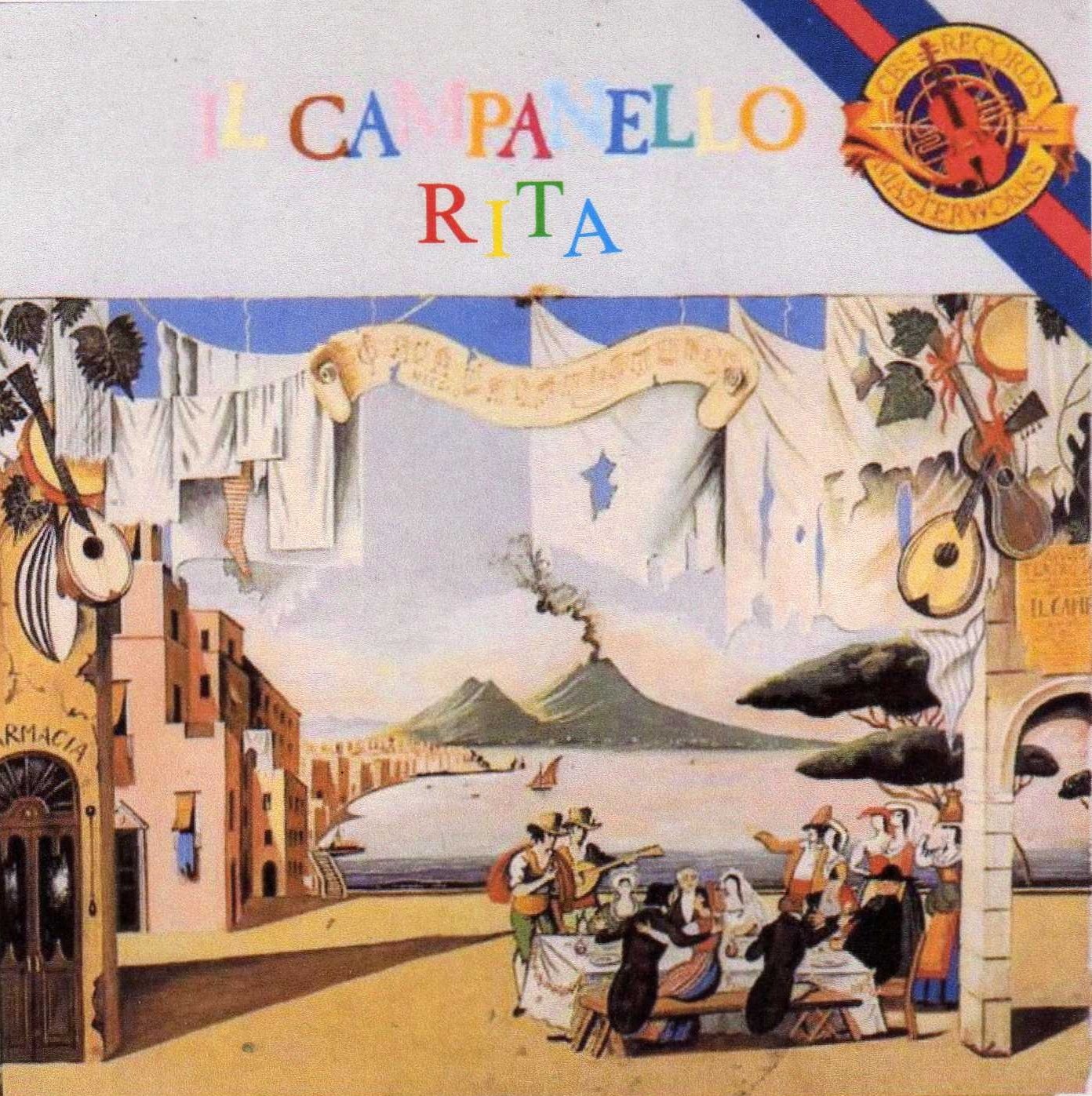
Operas Combinadas: DONIZETTI: Rita & Il Campanello


Dos magníficas ópera cómicas de Donizetti en 1 Acto, que yo suelo escuchar juntas. Ambas tratan de infidelidades conyugales, con una música y unas arias estupendas. La version de Rita, de Nuova Era, tiene un sonido inmejorable, aun siendo en directo.


Rita, ou Le mari battu (Rita, or The Beaten Husband) is an opéra comique in one act, composed by Gaetano Donizetti to a French libretto by Gustave Vaëz. The opera, a domestic comedy consisting of eight musical numbers connected by spoken dialogue, was completed in 1841 under its original title Deux hommes et une femme (Two Men and a Woman). Never performed in Donizetti's lifetime, Rita premiered posthumously at the Opéra-Comique in Paris on May 7, 1860


In 1841, while Donizetti was in Paris waiting for the libretto to be completed for a commission by La Scala, he had a chance encounter with Gustave Vaëz, who had co-written the libretti for two of his earlier operas, Lucie de Lammermoor (The French version of Lucia di Lammermoor) and La favorite. He asked Vaëz if he could provide a libretto for a short opera to keep him busy while waiting for the La Scala project to advance. Vaëz quickly created Deux hommes et une femme (Two Men and a Woman), a comic piece in one act consisting of eight musical numbers connected by spoken dialogue. According to Vaëz, Donizetti completed the score in eight days.[1] However, the Opéra-Comique rejected it and Donizetti then had the libretto translated into Italian for an intended performance at the Teatro del Fondo in Naples. Following the death of the Teatro del Fondo's impresario, Domenico Barbaja, the Naples performance fell through. The score, still unperformed, was found in Donizetti's effects when he died in 1848. On May 7, 1860, twelve years after the composer's death, the opera premiered at the Opéra-Comique with the title Rita, ou Le mari battu (Rita, or The Beaten Husband).

Although not a great success at the time and only sporadically performed in the 100 years following its premiere, it was revived and warmly received first in Rome in 1955 and then at the Piccola Scala in Milan in 1965. In the ensuing 50 years Rita (both in the original French and its Italian translation) has become one of Donizetti's most frequently performed operas.[2] In 2009 Casa Ricordi published a new critical edition of the score, which restored the original spoken French dialogue and removed the changes which had been been made to the work for its posthumous premiere and in subsequent revivals. The original French version was reconstructed by the Italian musicologists, Paolo Rossini and Francesco Bellotto, from a recently discovered manuscript libretto with autograph annotations by Donizetti.[3]

Role Voice type Premiere Cast, 7 May 1860
(Conductor: - )
Rita, landlady of the tavern soprano Constance-Caroline Faure-Lefèbvre
Peppe, her husband tenor Victor Warot
Gaspar, her former husband baritone Barielle
Bortolo, a servant spoken role Jean-Baptiste Faure
Time: 18th century
Place: "The action takes place at an inn on the road from Genoa to Turin."[4]

At an inn belonging to Rita, the tyrannical and abusive wife of the timid Peppe, the couple finds that their lives are thrown into turmoil with the unexpected arrival of Gaspar, Rita's first husband, whom all believed to have drowned. In reality, Gaspar had run away to Canada. Believing that Rita has died in a fire, Gaspar has returned to obtain her death certificate so that he can remarry. When the two meet, Gaspar tries to run away. Peppe, however, sees this as an opportunity to free himself from Rita's slaps because Gaspar is her legitimate husband. The two men agree to a game such that whoever wins has to remain with Rita. Both try to lose, but ultimately the winner is Gaspar. Yet Rita, who had suffered frequently from the hand of Gaspar, refuses to return to be his wife. Gaspar, pretending he has lost the hand, induces Peppe to declare his love for Rita and his firm intention to remain as her husband. The crafty Gaspar, having achieved his purpose, takes his leave from the reconciled couple.


Link:
*

*

Il campanello or Il campanello di notte (The Night Bell) is a melodramma giocoso, or opera, in one act by Gaetano Donizetti. The composer wrote the Italian libretto after Mathieu-Barthélemy Troin Brunswick and Victor Lhérie's French vaudeville La sonnette de nuit. The premiere was on June 1, 1836


The opera was presented in Italian at the Lyceum Theatre in London on 6 June 1836 and in English on 9 March 1841. It was also given in in English in 1870. It was first performed in Italian in the US in Philadelphia on 25 October 1861; this production went on to New York three days later. An English translation was seen in that city on 7 May 1917.[1]

Today, it is very rarely presented.

Role Voice type Premiere Cast, 1 June 1836
(Conductor: - )
Serafina, a young bride soprano Amalia Schütz
Don Annibale di Pistacchio, an apothecary, her husband bass Raffaele Casaccia
Spiridione, Don Annibale's servant tenor
Madama Rosa, Serafina's aunt mezzo-soprano
Enrico, Serafina's cousin baritone Giorgio Ronconi
Time: Early 19th century
Place: Naples[2]

Don Annibale Pistacchio, an old apothecary, has just married the young Serafina. Enrico, Serafina's former lover, constantly interrupts the wedding night by showing up in several disguises and calling at Pistacchio's drugstore by ringing the night bell, asking the unfortunate groom to fill a preposterous list of prescriptions.


Serafina - Agnes Baltsa
Don Annibale Pistacchio - Enzo Dara
Spiridione - Carlo Gaifa
Madama Rosa - Biancamaria Casoni
Enrico - Angelo Romero

Vienna State Opera Chorus
Vienna Symphony Orchestra
Gary Bertini


Link:
CD